

Red Light Therapy: It’s no longer “Does it work?” — It’s “How does it work?”
Red light therapy has moved far beyond trend status. With thousands of published studies and decades of human research behind it, the conversation has shifted. It’s no longer about whether it works. It’s about how it works — and how to use it properly!
At Re Place in Notting Hill, it has become one of our most booked treatments. The demand has been so consistent that we’ve just ordered a second panel!
So what is all the research actually showing?
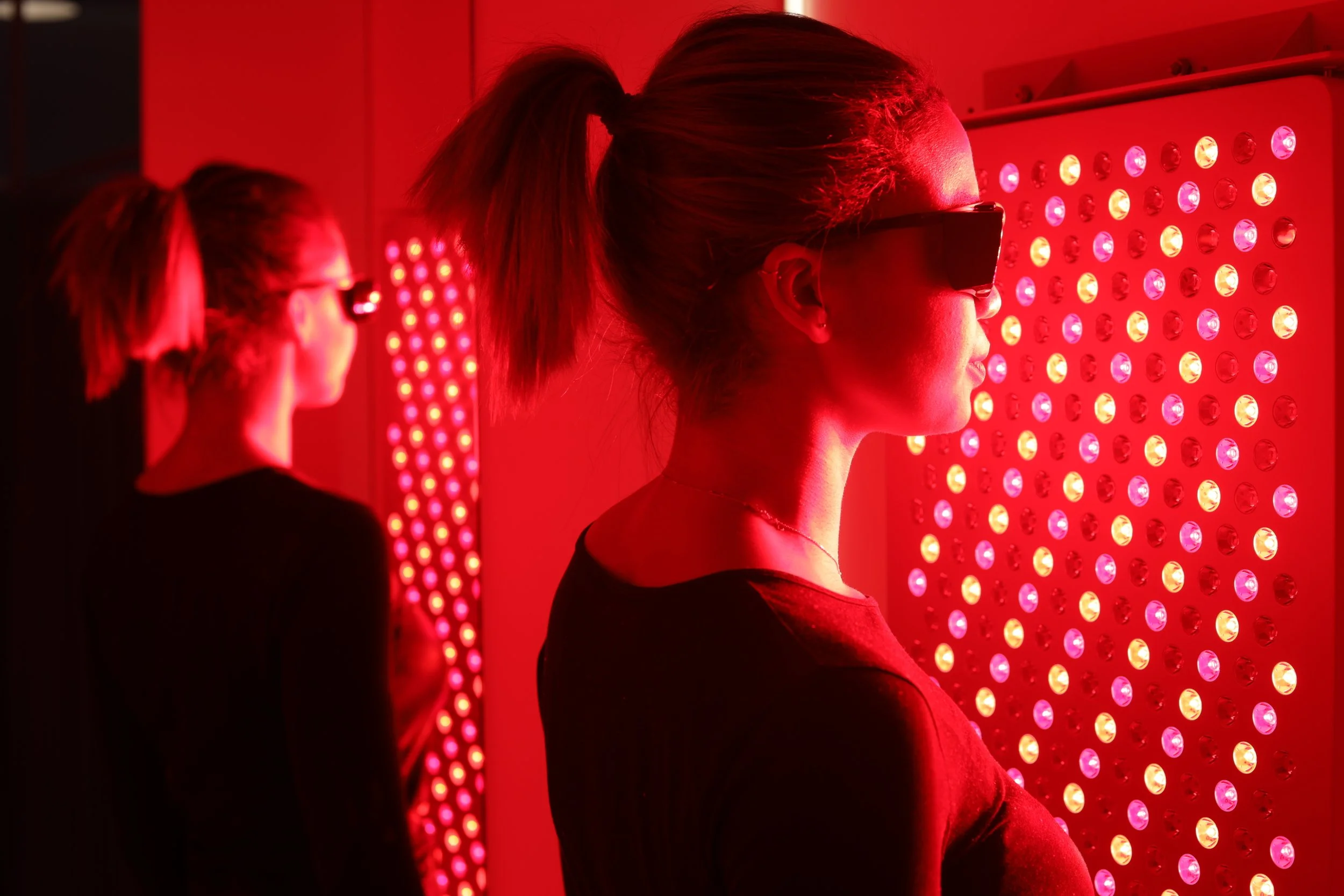
What studies have proven
Most people first hear about red light therapy for skin. And yes — the evidence for that is strong.
Skin health
Increased collagen production
Improved skin tone and texture
Reduction in fine lines
Support for acne and inflammation
But that’s just the surface.
Research also supports benefits for:
Cellular energy
Increased ATP (your body’s energy currency)
Better overall cellular performance
Healing and recovery
Faster tissue repair
Improved wound healing
Reduced muscle soreness
Pain relief
Reduction in joint pain and stiffness
Support for chronic inflammation
Brain health
Improved cognitive performance
Support for focus and mental clarity
Potential neuroprotective effects
Immune function
Support for balanced inflammatory response
Better resilience during periods of stress
This is why it’s used not just in beauty clinics, but in sports medicine, recovery settings, and increasingly in longevity-focused wellness spaces.
So how does it actually work?
It works at a cellular level.
Inside almost every cell in your body are tiny structures called mitochondria. Think of them as your internal power plants. Their job is to produce ATP — the molecule that fuels almost everything your body does.
Red and near-infrared light penetrate the skin and are absorbed by the mitochondria. This light stimulates an enzyme called cytochrome c oxidase, which helps the mitochondria produce ATP more efficiently.
In simple terms:
More light → better mitochondrial function → more cellular energy → better repair and performance.
When cells have more energy, they function better. When they function better, tissues repair more effectively. When tissues repair better, you feel the difference.
That’s the chain reaction.
Why consistency matters more than intensity
Red light therapy works best with short, regular exposure. Your cells respond to steady stimulation. Ten minutes several times per week is far more effective than doing 20 minutes occasionally. It’s similar to exercise — consistent input leads to adaptation.
At Re Place, we typically recommend frequent, short sessions rather than sporadic longer ones. It fits better into real life and supports better results!
Where to try Red Light Therapy in Notting Hill
If you’re searching for professional red light therapy in W2, we offer full-body sessions at:
Re Place
2A Chepstow Rd
Notting Hill
London W2 5BH
Our panels use clinically studied red and near-infrared wavelengths, and sessions are designed to be simple, efficient and easy to maintain consistently.
If you’re curious, start small. Stay consistent. Let your cells respond!
